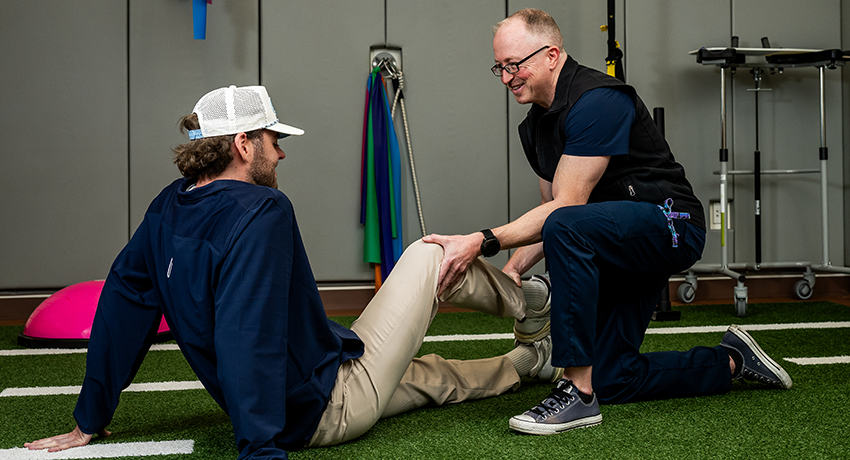
At UTMB Health, our orthopedic specialists are dedicated to providing comprehensive care for a wide range of knee conditions. Whether you're experiencing pain from an injury, arthritis, or a chronic issue, our team utilizes advanced diagnostic tools and treatment options to help you regain mobility. We're here to support you through every step of your recovery, from the initial consultation to rehabilitation, ensuring you receive the most effective and compassionate care possible.
Conditions We Treat
Ligament and Meniscus Injuries
ACL Tears
Overview:
An anterior cruciate ligament tear, better known as an ACL tear, refers to an injury to one of the four major ligaments in the knee. This ligament is crucial for knee stability and helps control rotational movements of the knee. ACL tears are quite common, especially in sports that involve sudden stops, changes in direction, jumping, and landing. They often occur when an individual pivots or lands awkwardly, or sometimes from a direct blow to the knee.
Symptoms:
- Hearing or feeling a pop in the knee
- Severe pain
- Rapid swelling
- Difficulty bending or straightening knee fully
- A feeling that knee is unstable, loose, or that it might buckle or "give out”
- Tenderness around joint line
Treatments & Procedures:
- Rest, ice, compression, and elevation (RICE) to reduce swelling and discomfort
- Physical therapy to regain full knee motion, strengthen surrounding muscles, improve stability, and enhance balance
- Using a brace for support and avoiding activities that stress the knee
- ACL reconstruction surgery
LCL Injuries
Overview:
An LCL injury refers to damage to the lateral collateral ligament, located on the outer side of the knee. This ligament prevents the knee from bending outward. It also helps keep the shin bone aligned with the thigh bone on the outer side of the joint. LCL injuries typically occur from a direct blow to the inside of the knee or when the knee is forced into a bowed-leg position. This can happen during sports activities, falls, or other traumatic events. Unlike the MCL, the LCL has a poorer blood supply, which can delay healing.
Symptoms:
- Outer knee pain that worsens with movement or when putting weight on leg
- Swelling on outer side of knee
- Tenderness Instability, particularly during pivots or when bearing weight
- Stiffness
Treatments & Procedures:
- Rest, ice, compression, and elevation (RICE) right after injury
- Medication
- Brace to protect knee and limit movement
- Exercises to get knee moving again and strengthen surrounding muscles
- Avoiding activities that stress LCL while it heals
- Surgical repair or reconstruction, for severe or complex injuries
MCL Tears
Overview:
A medial collateral ligament (MCL) tear is an injury to the medial collateral ligament, located on the inner side of the knee. This ligament is crucial for preventing the knee from bending too far inward, helping to stabilize the joint. These tears typically result from a direct blow to the outside of the knee or from twisting/forcing the knee inward, common in sports. MCL tears often heal well with non-surgical treatment due to the ligament's rich blood supply.
Symptoms:
- Inner knee pain that often worsens with movement or weight-bearing
- Swelling, usually on inner area of knee
- Tenderness
- Instability, especially during pivots or changes in direction
- Stiffness
- Bruising around inner knee, particularly with more severe tears
Treatments & Procedures:
- Rest, ice, compression, and elevation (RICE)
- Over-the-counter NSAIDs
- A hinged knee brace to protect healing ligament and limit side-to-side motion
- Physical therapy for regaining range of motion, strengthening surrounding muscles, and improving balance.
- Avoiding activities that stress MCL during recovery
Meniscal Tears
Overview:
A meniscal tear involves damage to one of the two cartilage pads (menisci) that cushion and stabilize the knee joint. It often occurs during sports that involve twisting, pivoting, or sudden stops, especially when the foot is planted and the knee rotates. These injuries are common in younger athletes but can also happen in older adults whose menisci may weaken with age and tear from simple motions like squatting.
Symptoms:
- Sudden pain during injury, often on one side of knee
- Swelling that may develop over several hours
- A popping sensation at time of injury
- Stiffness and reduced range of motion
- Catching, locking, or clicking in knee
- Pain worsens with twisting or squatting
- Feeling of knee “giving way” in some cases
Treatments & Procedures:
- Rest, ice, Compression, Elevation (RICE)
- Activity modification
- Anti-inflammatory medications (NSAIDs)
- Physical therapy to improve strength and flexibility
- Corticosteroid injections (in some cases)
- Ligament repair and reconstruction
- Meniscus repair
- Meniscus transplantation
PCL Tears
Overview:
A posterior cruciate ligament, better known as PCL, tear is an injury to the posterior cruciate ligament, a key ligament at the back of the knee. Its main job is to stop your shin bone from sliding too far backward relative to your thigh bone, and it also helps with rotational stability. These tears are less common than ACL tears and usually happen from a direct impact to the front of a bent knee or falling directly onto a bent knee.
Symptoms:
- Pain in the back of the knee, which might worsen with activity or when kneeling
- Swelling within a few hours of the injury
- A feeling of the knee "giving way" or feeling loose, particularly when trying to stop
- suddenly or go downstairs
- Difficulty walking
- Limited range of motion
Treatments & Procedures:
- Bracing & activity modification: A brace may be used for support, and activities that stress the PCL (like deep squats or kneeling) are avoided during healing.
- Rest, ice, compression, and elevation (RICE) to reduce swelling and discomfort
- Physical therapy to regain full knee motion, strengthen surrounding muscles, and improve overall balance and stability
- Using a brace for support and avoiding activities that stress the knee
- PCL reconstruction surgery
- Post-surgical rehabilitation
Kneecap Conditions
Dislocations
Overview:
A dislocation occurs when one or more of the bones are forced out of their normal position at a joint, often due to trauma such as a fall, sports injury, or direct blow. This injury disrupts the alignment of the joint and can damage surrounding ligaments, tendons, and nerves. It most commonly affects individuals involved in high-risk activities or occupations and older adults who are more prone to falls. Dislocations can occur in almost any body joint, but the most affected ones are the shoulder, finger, knee, elbows, hip, and jaw joints.
Symptoms:
- Intense pain at time of injury
- Visible deformity or misalignment of joint
- Swelling and bruising
- Inability to move affected joint
- Numbness or tingling (if nerves are compressed)
Treatments & Procedures:
- Manual repositioning of dislocated joint under local or general anesthesia
- A splint or cast to allow ligaments and soft tissues to heal
- Surgery, if dislocation is complex, unstable, or involves fractures
- Physical therapy to help restore strength, mobility, and joint function after immobilization or surgery
- NSAIDs and ice to reduce pain and inflammation
Jumper’s Knee
Overview:
Jumper’s knee, also known as patellar tendinopathy, is an overuse injury of the patellar tendon, which connects the kneecap to the shinbone. It’s common in athletes whose sports involve frequent jumping or explosive leg movements, such as basketball or volleyball. Repetitive strain leads to microtears and tendon degeneration, often worsened by poor landing mechanics or tight leg muscles.
Symptoms:
- Pain and tenderness just below kneecap
- Pain that worsens with jumping, running, or stairs
- Stiffness in knee, especially after activity or prolonged sitting
- Swelling or thickening of tendon over time
- Decreased performance in sports involving explosive leg use
- Pain with kneeling or pressing on tendon
Treatments & Procedures:
- Rest from aggravating activities
- Ice and NSAIDs for pain control
- Eccentric strengthening exercises
- Stretching tight muscles
- Patellar tendon straps or braces
- Shockwave therapy (in chronic cases)
- Platelet-rich plasma (PRP) injections (used selectively)
- Surgery, for severe, chronic cases
Patellar Tendon Tear
Overview:
A patellar tendon tear is a serious injury in which the tendon connecting the kneecap to the shinbone partially or completely ruptures. It usually occurs during high-impact movements like jumping or landing, especially in individuals with pre-existing tendon weakness from chronic overuse, tendinopathy, or medical conditions like diabetes.
Symptoms:
- Sudden, severe pain at front of knee during injury
- Swelling and bruising, especially below kneecap
- Inability to straighten knee
- A tearing or popping sensation at time of injury
- Difficulty walking or bearing weight
- A visible gap or indentation below kneecap
- High-riding kneecap (in complete ruptures)
Treatments & Procedures:
- Knee immobilization in a brace
- Physical therapy once healing begins
- Gradual return to weight-bearing activities
- Surgery, for complete tears
Runner’s Knee
Overview:
Runner’s knee, also known as patellofemoral pain syndrome, is a common condition characterized by pain around or behind the kneecap. It involves the area where the kneecap meets the thigh bone. Runner’s knee often results from an imbalance in the forces on the kneecap, irritating the surrounding cartilage or soft tissues. Common causes include overuse, muscle imbalances, and issues with how the body moves.
Symptoms:
- Pain around or behind kneecap that worsens with activities that put stress on knee grinding, popping, or clicking sensation
- Stiffness after periods of inactivity
- Mild welling around kneecap
- Weakness in quadricep muscles
Treatments & Procedures:
- Rest, ice, compression, and elevation (RICE)
- Exercises to strengthen and stretch muscles around knee
- Over-the-counter anti-inflammatory medications
- Physical therapy to strengthen leg muscles and improve flexibility and range of motion
- Orthotics to help correct foot alignment
- Knee bracing to provide support and stability
Other Conditions
Articular cartilage damage
Overview:
Articular cartilage damage refers to injury or wear of the smooth, white cartilage that covers the ends of bones where they meet in a joint. In the knee, this cartilage allows the thigh bone, shin bone, and kneecap to glide over each other with minimal friction. It's essential for shock absorption and pain-free joint movement. Articular cartilage damage can follow an acute injury or trauma, degeneration, repetitive stress, joint instability, or a meniscal tear.
Symptoms:
- Knee pain during movement or weight bearing
- Swelling or joint stiffness
- Catching, grinding, or a "locking" sensation
- Decreased range of motion
- In some cases, joint instability or weakness
Treatments & Procedures:
- Activity modification to reduce joint stress
- Physical therapy to strengthen surrounding muscles and improve joint function
- Weight management to decrease pressure on the knee
- Anti-inflammatory medications (NSAIDs) or corticosteroid injections to control pain and swelling
- Hyaluronic acid injections to improve joint lubrication temporarily
- Arthroscopic debridement to clean and smooth damaged cartilage
- Surgery for more severe or persistent cases
Fractures
Overview:
A fracture involves a break or crack in any bone in the body. These injuries are often caused by falls, direct impacts, sports injuries, and other traumatic injuries. Fractures can range from small hairline cracks to more severe breaks that shift the bone out of alignment or break it into multiple pieces. Anyone of any age can sustain a bone fractur, but they are especially common in children and older adults.
Symptoms:
- Sudden pain at time of injury
- Swelling and bruising
- Deformity or crooked appearance of affected limb
- Difficulty moving affected limb
- Tenderness at site of injury
Treatment/procedure options:
- Splinting or casting for immobilization
- Manually aligning bones without surgery
- OTC or prescription pain medications to ease discomfort
- Surgical fixation to stabilize complex fractures
- Physical therapy to restore strength and motion after immobilization
Knee Osteoarthritis
Overview:
Osteoarthritis of the knee is the most common form of arthritis, a condition that causes pain and inflammation in one or more joints. It’s caused by wear and tear of joint cartilage over time. It commonly develops with age, joint overuse, previous injuries, or genetics. Knee osteoarthritis can make walking, climbing stairs, and other daily movements increasingly difficult without appropriate treatment.
Symptoms:
- Pain in knee during or after activity
- Stiffness, especially in morning or after sitting
- Swelling around joint
- A grinding or popping sensation with movement
- Decreased range of motion Tenderness when pressing on joint
- Weakness or instability in knee
Treatments & Procedures:
- Weight management to reduce stress on joints
- Pain relievers and anti-inflammatories
- Physical therapy to maintain joint function
- Use of braces or orthotic devices to support knee
- Injections (steroid, viscosupplementation/gel, platelet-rich plasma)
- Total knee replacement
Loose Bodies
Overview:
Loose bodies in the knee refer to small fragments of bone or cartilage (or both) that have broken off and are floating freely within the joint space. These fragments can vary in size and may move around inside the knee, sometimes becoming caught between joint surfaces, which can lead to symptoms. Loose bodies typically result from trauma or injury to the knee, degenerative joint conditions, or cartilage wear.
Symptoms:
- Locking or catching sensation in knee
- Intermittent pain or swelling
- Limited range of motion
- Instability or feeling of something "floating" in joint
Treatments & Procedures:
- Rest and activity modification to avoid movements that aggravate symptoms
- Anti-inflammatory medications (NSAIDs) to reduce pain and swelling
- Physical therapy to maintain knee strength and mobility when symptoms are mild
- Arthroscopic removal of loose bodies using minimally invasive surgery
- Cleaning or smoothing damaged cartilage if needed during surgery
- Treatment of underlying causes
Services & Procedures
We've highlighted some of the most common services—please explore the conditions list for treatments by condition.
Arthroscopic Reconstruction Surgery
Overview:
Arthroscopic reconstruction surgery is a minimally invasive approach used to repair or rebuild major joint structures through small incisions with the aid of a tiny camera and specialized instruments. Unlike simple arthroscopy, reconstruction focuses on restoring stability and function through advanced procedures such as ligament reconstruction (ACL, PCL), rotator cuff or labral repair, meniscus repair or transplant, and cartilage repair or restoration (including cartilage transplant techniques). This approach promotes joint preservation, stability, and long-term mobility with less pain and quicker recovery compared to open surgery.
Conditions Treated:
- Anterior cruciate ligament (ACL) tears
- Posterior cruciate ligament (PCL) tears
- Rotator cuff tears
- Shoulder labral tears (e.g., SLAP tears, Bankart lesions)
- Shoulder instability requiring ligament/tendon repair
- Meniscal root tears requiring reconstruction
- Cartilage restoration procedures
- Cartilage defects
Before the Procedure:
- Detailed evaluation with imaging (MRI, X-ray) to confirm extent of damage
- Review of medical history, medications, and anesthesia planning
- Pre-surgery instructions on eating, drinking, and medication adjustments
- Education about procedure, risks, recovery, and rehabilitation process
- Arrangements for transportation, as this is usually outpatient surgery
After the Procedure:
- Outpatient recovery with bandages over small incisions
- Pain control and anti-inflammatory medications as prescribed
- Immobilization with a sling (shoulder) or brace (knee) for protection
- Structured physical therapy to restore strength, motion, and stability
- Gradual progression back to activities, often over several months
- Follow-up appointments to ensure proper healing and joint function
Visit the Total Hip & Knee Joint Replacement page to learn more about your joint reconstruction options.
Arthroscopic Shoulder & Knee Surgery
Overview:
Arthroscopic, or minimally invasive, shoulder and knee surgery uses small incisions and a tiny camera (arthroscope) to diagnose and treat joint problems. Special surgical instruments are inserted through these incisions, allowing the surgeon to repair damaged tissues with less disruption than open surgery. This approach typically results in smaller scars, less pain, faster recovery, and quicker return to daily activities.
Conditions Treated:
- Rotator cuff tears
- Shoulder impingement syndrome
- Labral tears
- Shoulder instability
- Meniscus tears
- Anterior cruciate ligament (ACL) injuries
- Cartilage damage
- Loose bodies in the joint
- Inflammation of the joint lining (synovitis)
Before the Procedure:
- Comprehensive evaluation including physical exam and imaging (X-ray, MRI, or ultrasound)
- Review of medical history and medications, with possible adjustments
- Instructions on eating, drinking, and medications before the procedure
- Education about anesthesia, surgical process, and recovery expectations
- Arranging transportation home, as arthroscopy is often an outpatient procedure
After the Procedure:
- Typically same-day discharge with bandages over small incisions
- Pain management and anti-inflammatory medications as prescribed
- Use of a sling (shoulder) or brace (knee) if needed
- Early physical therapy to restore motion and strength
- Gradual return to normal activities, usually faster than with open surgery
- Follow-up appointments to monitor healing and progress
Computer-Navigated Total Hip & Knee Replacement
Overview:
Computer-navigated total hip and knee replacement, including robotic-assisted, is an advanced surgical technique that uses specialized computer technology to guide implant positioning with greater accuracy. Real-time data helps the surgeon align components precisely, improving joint function, balance, and longevity of the replacement. This approach can reduce complications, enhance recovery, and provide more consistent outcomes compared to traditional methods of hip and knee joint replacement.
Conditions Treated:
- Osteoarthritis
- Rheumatoid arthritis and other inflammatory arthropathies
- Post-traumatic arthritis
- Avascular necrosis of the hip
- Hip dysplasia leading to joint damage
- Severe joint deformities or misalignment
- Failed previous joint replacement
Before the Procedure:
- Comprehensive evaluation, including physical exam, imaging, and lab tests
- Pre-surgical planning using computer navigation to map joint alignment
- Instructions on medications, diet, and physical preparation
- Education on hospital stay, recovery, and rehabilitation
After the Procedure:
- Hospital stay or same-day discharge, depending on health and procedure
- Pain management, wound care, and early movement guided by your care team
- Physical therapy to restore strength, mobility, and balance
- Gradual return to normal activities over several weeks to months
- Follow-up visits to monitor healing and implant function
Revision Total Hip & Knee Replacement
Overview:
Revision total hip and knee replacement is a surgical procedure performed when a previous joint replacement wears out, loosens, or develops complications such as infection, instability, or bone loss. Using specialized techniques and implants, surgeons remove the damaged prosthesis and replace it with new components. This complex surgery restores stability, reduces pain, and improves mobility in patients who require a second joint replacement.
Conditions Treated:
- Implant loosening or wear
- Periprosthetic joint infection
- Instability or dislocation
- Periprosthetic fracture
- Severe bone loss
- Persistent pain or stiffness
- Failed or broken implant
- Allergic reaction to implant materials
Before the Procedure:
- Thorough evaluation with imaging, lab tests, and possible joint aspiration to check for infection
- Detailed surgical planning, often with specialized implants or bone grafts
- Review of medical history and medications, with adjustments as needed
- Pre-surgery counseling on risks, recovery, and expected outcomes
- Instructions on preparing for hospital stay and rehabilitation
After the Procedure:
- Hospital stay is often longer than initial joint replacement due to the complexity of surgery
- Pain management, antibiotics (if infection was involved), and close monitoring
- Use of walking aids and physical therapy to gradually restore movement and strength
- Activity restrictions may be stricter at first, progressing as healing allows
- Regular follow-up appointments with imaging to ensure implant stability and healing
Can’t find what you're looking for? Contact the care team at the clinic for assistance.
Your Care Team
Each provider may treat different conditions. Click on a profile to see their areas of specialty.
Frequently Asked Questions
-
When should I see an orthopedic specialist for my knee pain?
If you have persistent pain, swelling, instability, locking, or difficulty walking despite rest and home care, it’s a good idea to get evaluated by a specialist. -
What causes knee pain?
Knee pain can be caused by injury, overuse, arthritis, inflammation, mechanical problems, or degeneration of cartilage. -
How is knee pain diagnosed?
Diagnosis usually involves a physical exam, patient history, and imaging tests such as X-rays, MRI, or CT scans. -
How can I prevent knee injuries?
Maintaining a healthy weight, strengthening muscles around the knee, using proper technique during exercise, and wearing supportive footwear help reduce knee injury risks. -
What should I expect during knee replacement surgery?
Knee replacement involves replacing damaged joint surfaces with artificial implants. It requires anesthesia and postoperative rehabilitation to regain strength and mobility.
Visit the Total Hip & Knee Joint Replacement to learn more about knee replacement and other joint surgery procedures.
All Orthopedic Specialties
Our Locations
- 2309 West Mulberry Street
- M–F: 8 a.m.–5 p.m. and Friday 8 a.m.–12:00 p.m.
- (979) 849-9557
- (979) 849-0789
- Website
- 250 Blossom Street
Suite 110 - M–F: 8 a.m.–5 p.m.
- (832) 505-1200
- (832) 632-7866
- Website
- 1715 South Friendswood Drive, 4th Floor
- M–F: 8 a.m.–5 p.m.
- (832) 505-1200
- (281) 482-3963
- Website
- 2240 Gulf Freeway South
- M–F: 8 a.m.–5 p.m.
- (832) 505-1200
- (281) 309-0137
- Website
- 400 Harborside Drive
Suite 109, Entrance A - M–F: 8 a.m.–5 p.m.
- Adult & Pediatric
- (409) 266-7846
- (409) 772-5890
- Website