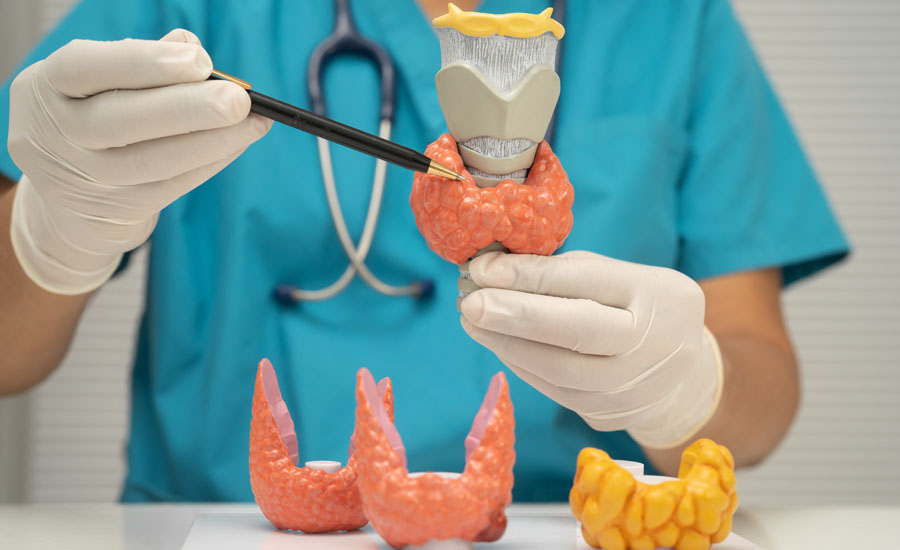

Advanced care for endocrine cancer
Cancer can affect nearly any part of the body, including the glands and other hormone-producing organs. At UTMB Health, we focus on diagnosing and surgically treating these cancers using advanced techniques aimed at removing tumors and reducing the risk of recurrence. If you have an endocrine cancer diagnosis or a suspicious growth, we’re here to evaluate your condition and explain your options. We want you to feel at ease with the care you receive from our team, because your health matters to us.
Conditions We Treat
Adrenal Tumors
Overview:
Adrenal tumors develop in the adrenal glands, which sit above each kidney and produce hormones that regulate metabolism, blood pressure, and stress response. These tumors may be benign or cancerous and can sometimes produce excess hormones, leading to noticeable changes in body function. Evaluation focuses on determining whether the tumor is functioning (hormone-producing) or non-functioning and whether it is malignant.
Common Symptoms:
- High blood pressure
- Unexplained weight gain or loss
- Muscle weakness
- Fatigue
- Anxiety or mood changes
- Excess sweating or palpitations
- Abdominal or flank pain
Treatments & Procedures:
- Imaging (CT, MRI) for evaluation
- Blood and urine hormone testing
- Surgical removal of a portion or all of adrenal gland (adrenalectomy)
- Laparoscopic or robotic surgery
- Medication to control hormone levels
- Monitoring for small, non-functioning tumors
Parathyroid Tumors
Overview:
Parathyroid tumors affect the parathyroid glands, which regulate calcium levels in the body. Most are benign but can cause excess hormone production, leading to elevated calcium levels. This can affect bones, kidneys, and overall metabolic balance. Evaluation focuses on confirming hormone overproduction and identifying the affected gland(s).
Common Symptoms:
- Fatigue and weakness
- Kidney stones
- Bone pain or fractures
- Frequent urination
- Abdominal discomfort
- Memory or concentration issues
Treatments & Procedures:
- Blood calcium and PTH testing
- Imaging (ultrasound, sestamibi scan)
- Removal of parathyroid gland (parathyroidectomy)
- Bilateral neck exploration (if needed)
- Intraoperative PTH monitoring
- Observation in mild or asymptomatic cases
Thyroid Cancer
Overview:
Thyroid cancer begins in the thyroid gland, which regulates metabolism through hormone production. It often presents as a nodule in the neck and may grow slowly or, in some types, more aggressively. Diagnosis typically involves imaging and biopsy. Treatment is focused on removing cancerous tissue and preventing spread to lymph nodes or other parts of the body.
Common Symptoms:
- Neck lump or swelling
- Hoarseness or voice changes
- Difficulty swallowing
- Persistent cough not related to illness
- Neck pain
- Enlarged lymph nodes
Treatments & Procedures:
- Ultrasound and fine-needle biopsy
- Partial or total thyroidectomy
- Lymph node removal (lymphadenectomy) if needed
- Radioactive iodine therapy
- Thyroid hormone replacement therapy
- Ongoing surveillance and imaging
Services & Procedures
Adrenalectomy
Overview:
Adrenalectomy is a surgical procedure to remove one or both adrenal glands, which sit above the kidneys and produce hormones that regulate metabolism, blood pressure, and stress response. It may be performed using minimally invasive (laparoscopic or robotic) techniques or through open surgery, depending on the size and type of the tumor.
Conditions Treated:
- Adrenal tumors (benign or malignant)
- Pheochromocytoma
- Adrenal cortical carcinoma
- Cushing’s syndrome (excess cortisol production)
- Primary hyperaldosteronism (Conn’s syndrome)
- Metastatic cancer involving the adrenal gland
Before the Procedure:
- Blood and urine tests to evaluate hormone levels
- Imaging (CT scan or MRI) to locate and assess the tumor
- Medications may be prescribed to control hormone-related symptoms (especially for pheochromocytoma)
- Fasting for a specified period before surgery
- Discussion of surgical approach (minimally invasive vs. open)
After the Procedure:
- Monitoring of hormone levels and vital signs
- Pain management and gradual return to normal activity
- Possible temporary or long-term hormone replacement therapy
- Hospital stay may range from same-day discharge to a few days
- Follow-up visits to monitor recovery and underlying condition
Parathyroidectomy
Overview:
Parathyroidectomy is the surgical removal of one or more of the parathyroid glands, typically performed to treat overactive glands that produce excess parathyroid hormone (PTH). This condition can disrupt calcium balance in the body.
Conditions Treated:
- Primary hyperparathyroidism
- Parathyroid adenoma (benign tumor)
- Parathyroid hyperplasia
- Parathyroid carcinoma (rare)
- Secondary hyperparathyroidism (often related to kidney disease)
Before the Procedure:
- Blood tests to measure calcium and PTH levels
- Imaging (ultrasound, sestamibi scan) to locate abnormal glands
- Review of medications, especially calcium or vitamin D supplements
- Fasting prior to surgery
- Preoperative planning for minimally invasive vs. traditional approach
After the Procedure:
- Monitoring calcium levels to prevent hypocalcemia
- Temporary symptoms like tingling or muscle cramps may occur
- Calcium and vitamin D supplements may be prescribed
- Most patients go home the same day or after a short stay
- Follow-up to ensure normalization of hormone and calcium levels
Thyroidectomy
Overview:
A thyroidectomy is surgery to remove all or part of the thyroid gland, the small butterfly-shaped gland in the neck that helps control how the body uses energy. The thyroid produces hormones that help regulate many important body functions.
Conditions Treated:
- Thyroid cancer
- Goiter (enlarged thyroid)
- Hyperthyroidism
- Graves’ disease
- Suspicious thyroid nodules
- Toxic adenoma
Before the Procedure:
- Surgical consultation, evaluation, and medical history review
- Blood tests and imaging, if needed
- Medication and supplement review
- Instructions for stopping certain medications
- Fasting before surgery
After the Procedure:
- Mild neck soreness, swelling, or stiffness
- Temporary sore throat or hoarseness
- Incision care and monitoring
- Activity restrictions during recovery
- Pain management, as needed
- Review of pathology results, if applicable
- Thyroid hormone replacement medication, if needed
- Monitoring for signs of infection or complications
Your Care Team
Each provider may treat different conditions. Click on a profile to see their areas of specialty.

Frequently Asked Questions
-
How is endocrine cancer diagnosed?
Diagnosis may include blood tests, imaging (such as ultrasound, CT, or MRI), and biopsy of a nodule or mass.
-
Do all endocrine tumors need surgery?
Not all tumors require surgery. Some small or non-cancerous tumors may be monitored, while others need surgical removal based on type, size, and hormone activity.
-
What is the most common surgery for thyroid cancer?
The most common procedure is a thyroidectomy, which removes part or all of the thyroid gland. Lymph nodes may also be removed if cancer has spread.
-
What happens if my adrenal tumor is cancerous?
If an adrenal tumor is cancerous or hormone-producing, surgical removal (adrenalectomy) is often recommended, sometimes along with additional treatments depending on the case.
-
Are endocrine tumors usually cancerous?
Many endocrine tumors are benign, but some can be cancerous or have the potential to become cancerous, which is why evaluation is important.
-
Will I need hormone replacement after surgery?
Some patients may need hormone replacement depending on which gland is removed, such as thyroid hormone after thyroid surgery.
All Specialties
Our Locations
- 146 East Hospital Drive
Suite 205 - Tuesday: 12 p.m.–5 p.m.
- (979) 848-9111
- (979) 849-1806
- Website
- 215 Oak Drive South
Suite B - M–F: 8 a.m.–5 p.m.
- (979) 319-3051
- (979) 266-9834
- Website
- 2280 Gulf Freeway South
2nd Floor - M–F: 8 a.m.–5 p.m.
- (832) 505-4000
- (832) 505-4040
- Website
- 1005 Harborside Drive
5th Floor - M–F: 8 a.m.–5 p.m.
- (409) 772-6789
- (409) 772-2812
- Website