If you have a new flame in your life – or even an older one – that flutter in your chest could be love. Or it could be something even scarier.
But don’t jump to worst-case scenarios.

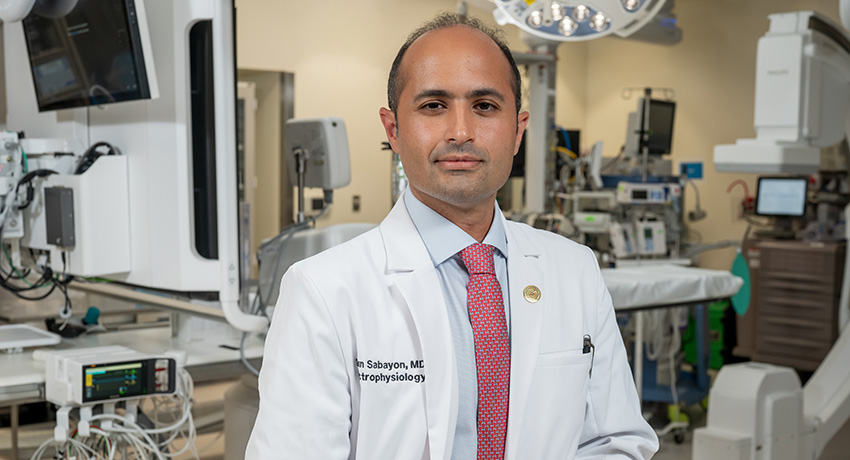
“Most irregular heartbeats are not dangerous,” said Dr. Muhie Dean Sabayon, assistant professor of medicine in the Department of Cardiovascular Medicine at The University of Texas Medical Branch Health System (UTMB Health). “In fact, many people have occasional skipped beats or brief flutters that are benign. These are often just premature beats — extra heartbeats that almost everyone experiences at some point. They can be triggered by stress, caffeine, poor sleep, dehydration, or even just normal body chemistry.
“That said, while most are harmless, a small percentage can signal something more serious — so context and symptoms matter."
Your heart has its own electrical system that keeps it beating at a steady rhythm. When those electrical signals get a little off track, the rhythm can change. That’s called arrhythmia, and it means your heart is beating too fast, too slow, or unevenly.
Occasional skipped beats, especially during stress, after caffeine, or when you’re tired, usually are not a cause for concern. But persistent or worsening irregular rhythms may need medical evaluation. For example, premature ventricular contractions are extra or skipped beats that are typically harmless. Atrial fibrillation, on the other hand, is a fast, uneven heartbeat that can increase the risk of stroke if not treated.
Arrhythmias can be triggered by everyday factors or underlying medical conditions. Lifestyle triggers include caffeine or energy drinks, alcohol, stress or anxiety, poor sleep, and dehydration. Medical causes may include high blood pressure, heart disease, diabetes, thyroid problems, or a family history of heart rhythm disorders.
“If palpitations are happening frequently, lasting more than a few minutes at a time, getting worse, or interfering with your daily life, it’s worth getting checked out,” Sabayon said. “You should especially see a doctor if palpitations are accompanied by dizziness, shortness of breath, chest discomfort, and/or fainting or nearly fainting.
“Even if it turns out to be benign, having it evaluated can give you peace of mind — and that reassurance is valuable."
A general rule of thumb: If it happens once in a while and goes away, it’s usually OK. If it happens often, lasts longer, or comes with symptoms, get checked. However, Sabayon stresses that fainting should never be ignored.
“If someone passes out and it might be related to their heart rhythm, that needs urgent evaluation,” he said. “Severe chest pain or palpitations with shortness of breath that don’t resolve quickly should also prompt immediate medical care.”
People with underlying heart disease are at higher risk. That includes those who have had a prior heart attack, heart failure, cardiomyopathy (a disease of the heart muscle), or heart valve problems.
“Risk also increases with age,” Sabayon said. “Certain genetic conditions can predispose younger people to arrhythmias as well. And conditions like high blood pressure, diabetes, sleep apnea, and thyroid disorders can raise the risk too.”
How are irregular heartbeats diagnosed and treated?
The good news is that modern electrophysiology — a specialized branch of cardiology focusing on the diagnosis and treatment of heart rhythm disorders by studying the heart's electrical system — offers highly effective treatments for many rhythm disorders, Sabayon said.
At UTMB Health, diagnosis often starts with simple, noninvasive tools, including EKGs, which record your heart’s electrical activity; monitors worn at home to catch irregular rhythms over time; and even smartwatches that can help spot patterns.
- Treatment options depend on the type of arrhythmia and may include:
- Medications to control heart rate or rhythm
- Catheter ablation, a minimally invasive procedure to correct faulty electrical signals
- Implantable devices like pacemakers or defibrillators in more serious cases
Prevention starts with heart-healthy habits
Not all arrhythmias can be prevented, but healthy choices make a big difference. Protect your heart by:
- Eating a balanced, heart-healthy diet
- Staying physically active
- Managing stress
- Limiting caffeine and alcohol
- Keeping blood pressure, cholesterol, and diabetes under control
Sabayon reiterated that most palpitations are not dangerous, but your body is giving you information.
“Don’t panic over every skipped beat. But don’t ignore persistent, worsening, or concerning symptoms either — especially if they’re new for you,” he said. “When in doubt, get checked. We’d much rather reassure you than miss something important.
“Your heart rhythm is something we can usually evaluate quickly and clearly, and in many cases, fix."
When it comes to your heart and your health, it’s far better to err on the side of caution, because, as you may have heard, learning to love yourself is the greatest love of all. (Cue Whitney Houston earworm. You’re welcome.)
If you have concerns about your heart rhythm, UTMB Health is here for you. Schedule an appointment with a primary care physician.