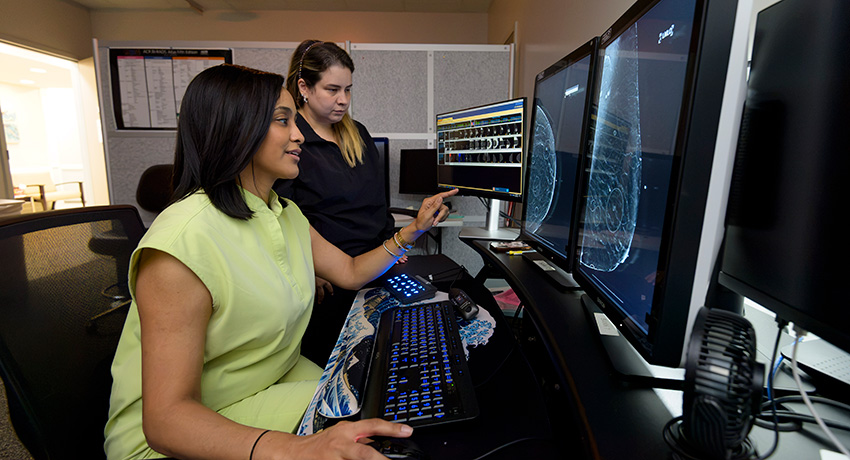
Breast Cancer Awareness Month is a gentle reminder to prioritize your health, but taking that first step toward routine screening can feel daunting. Annual mammograms offer peace of mind by capturing detailed images of breast tissue, allowing radiologists like Ashley Stanley, MD, with The University of Texas Medical Branch (UTMB Health), to spot subtle changes long before they can ever be felt. Catching breast cancer early opens the door to more varied, effective treatment options and gives women the clearest path forward.
When to start and how often to screen
UTMB Health aligns with recommendations from the Society of Breast Imaging (SBI) and the American College of Radiology (ACR):
- Average-risk women: Should begin annual screening mammograms at age 40.
- Screening frequency: Annual mammograms are recommended over biennial screening. Screening every year helps clinicians catch small changes promptly, reducing the likelihood of cancer advancing between appointments.
- When to stop: Annual mammography should continue as long as a woman is in good general health and would pursue treatment if a change were found.
Understanding high risk and early screening
Some women may benefit from beginning screenings before age 40 or adding supplemental imaging, such as a breast MRI or ultrasound. A clinician may evaluate individual risk factors to determine if an earlier or tailored schedule is appropriate.
Factors that influence risk include:
- A strong family history of breast or ovarian cancer.
- Known genetic mutations, such as BRCA1 or BRCA2.
- Prior high-risk breast biopsy results.
- A history of chest radiation therapy at a young age.
- A high personal risk score based on combined personal and reproductive history.
If you have questions about your personal risk, talk with your clinician to establish the right timeline for you.
What to expect at your appointment
It is completely normal to feel a bit nervous before a mammogram, especially if it is your first. “I see a lot of patients who are anxious to get their screening or come in for follow-up imaging because they’re worried about the worst,” says Dr. Stanley. “But the majority of women walking through our doors will receive good news and reassuring results.”
During the test, a technologist will position your breast on a specialized plate, applying brief compression to spread the tissue for a clear image. While the pressure may feel uncomfortable for a few seconds, the process is quick. “Our team is dedicated to guiding you through every step of the process and ensuring you feel supported and comfortable throughout your visit,” says Dr. Stanley.